Park75 Buffalo: How 290-Square-Foot Micro Living Works

When Cedarland Development Group set out to build Park75 at 1175 Delaware Avenue in Buffalo, they had a clear vision: an 84-unit apartment community that would bring a new standard of urban living to the city. Biophilic architecture, reclaimed materials, white oak finishes, smart home technology, in-unit laundry, a sauna, EV charging, Park75 was designed to compete on every dimension of modern rental living.
But the project also had to pencil out. And with construction costs running high, the math required creative thinking about density.
The answer was micro units. Twenty of Park75's residences are compact studios starting at just 290 square feet, smaller than anything Cedarland had built before, and smaller than what most Buffalo renters had ever considered. Making those units genuinely livable, rather than merely rentable, would define whether the project succeeded or stalled.
That's where Resource Furniture entered the conversation.
Finding the Inspiration and Tracing It Back
Torrie Nasca, who led the project for Cedarland, wasn't searching for a furniture company when she first encountered Resource Furniture's work. She was searching for a layout. Browsing inspiration for how to approach the micro unit floor plans, she came across Yotelpad Miami, a hybrid-hospitality apartment building in Miami that used a curation of Resource Furniture pieces to maximize space.
"I found [Yotelpad Miami] and I was like, this is really good. I printed it out and posted it on the wall of our conference room. And when they said, okay, you've got to make this happen I traced the furniture back to Resource."
That reverse-engineered discovery speaks to something important: the best transformable furniture doesn't announce itself as a product category. It shows up as a solved problem. Torrie wasn't looking for a Murphy bed; she was looking for proof that a 290-square-foot apartment could feel like a home. Resource Furniture provided that proof.
From there, the partnership moved quickly. Cedarland engaged the Resource team early during the initial floor plan design phase because they knew that multi-purpose furniture wasn't something to retrofit. It had to be woven into the architecture from the start.

The Products: Penelope Sofa and the Giro Transforming Table
Each of the 20 micro units at Park75 was outfitted with two core Resource Furniture pieces, selected in white melamine to work with any resident's personal style and complement the building's clean, nature-forward aesthetic.
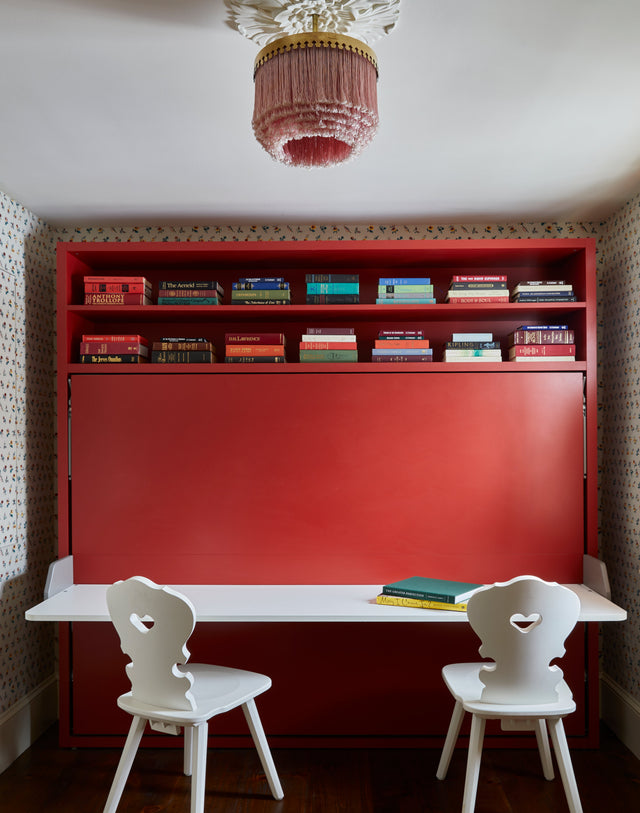
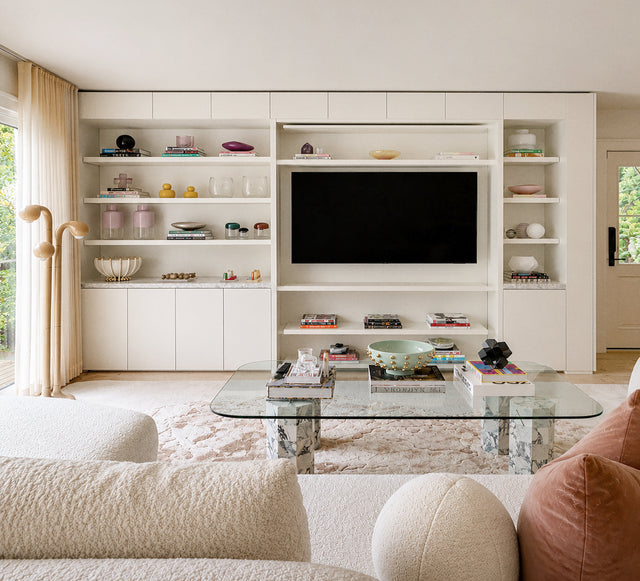
The Penelope Sofa Queen Wall Bed serves as the room's anchor. In its upright position, a sofa framed by integrated shelving on each side, offering storage and a built-in nightstand setup while giving residents a full, open living space. When the bed is lowered, the shelving stays in place and a quality mattress takes center stage, transforming the room for rest without losing an inch of storage. The system is built from 90% recycled and reforested wood, with formaldehyde-free finishes and zero-VOC lacquers, a natural fit for a development built around sustainable design principles.
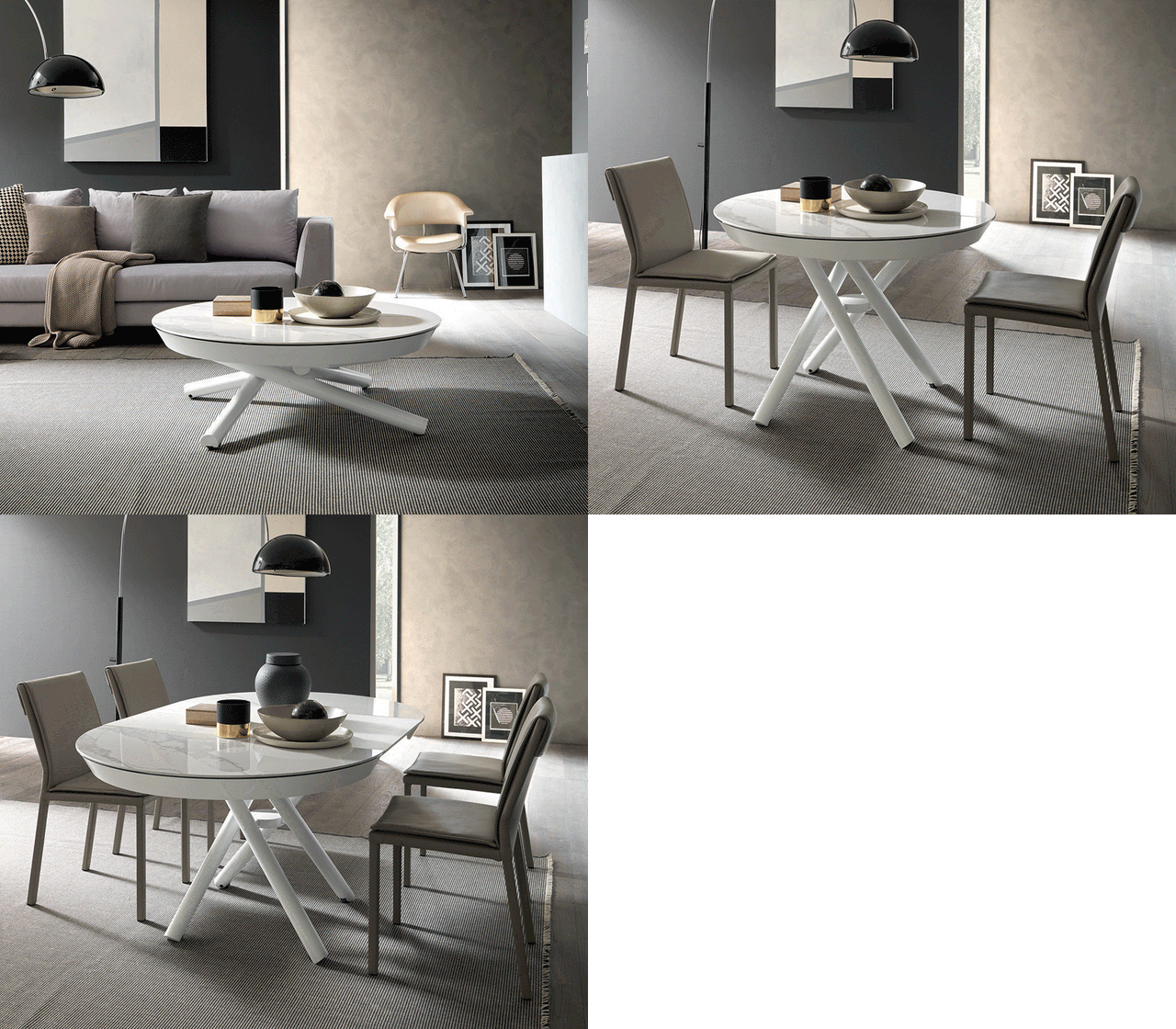
The Giro Transforming Table solved a problem that had been gnawing at the design team for months: where do residents eat? In a unit this size, a fixed dining table was out of the question. An early suggestion – a small fold-down surface with a chair pulled up to it – felt institutional, even infantilizing.
"Someone said, just have a little [wall-mounted fold-down table on a chain] you pull a chair up to. We knew it wasn't aligned with the level of design and sophistication we were aiming for, the Giro just solved the whole problem.”
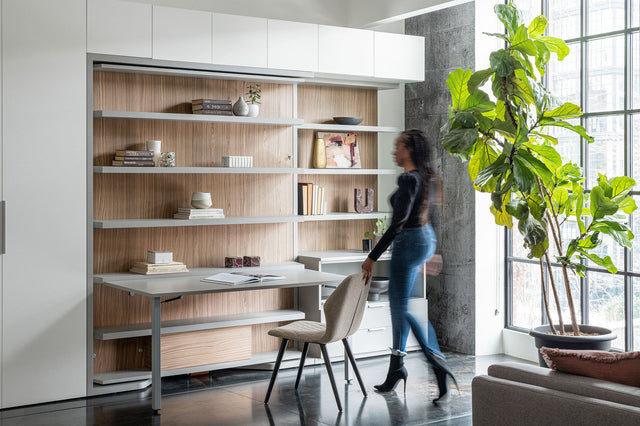
The Giro functions as a console table against the wall, a natural surface for a lamp, a plant, a few framed photos, until it's needed as a dining table or work desk, at which point it pivots 90 degrees from the wall to create a spacious surface for four. When staged during leasing tours, Torrie found it was one of the first things prospective residents noticed: a beautiful piece of furniture that happened to be incredibly functional, rather than a piece of equipment that demanded apology.

The Market Responds: Leased First, Fastest
Park75 opened in phases; floors three and four came online in late August 2025, followed by the first and second floors in September and October, with the ground floor and amenities completing just recently. As of April 2026, the building sits at 89% occupancy across all 84 units.
The micro units with transformable furniture? They were the first to lease and among the fastest in the building.
Part of that speed came from the profile of renters the building attracted. Park75's location near the Buffalo Niagara Medical Campus (BNMC) drew a significant number of medical professionals and residents on two-year rotations – exactly the kind of renter for whom a seamless, furnished move-in is not a nice-to-have but a genuine necessity.
"We're next to the Buffalo Niagara Medical Campus. A lot of medical professionals who are only here for two years don't want to move and bring all their furniture. They're working all the time. It's just a much more efficient living style."
For this audience, the fully furnished micro unit wasn't a compromise; it was the ideal product. No furniture to source, no logistics to manage, no wasted space. Just a thoughtfully designed home ready on day one.
And the rent? The furnished micro units commanded a meaningful premium over what a comparable unfurnished unit of the same size could have achieved, validating the upfront investment in quality furniture and, frankly, making the entire unit type viable. At $1,099/month at lease-up pricing, they offered accessible luxury in a market that hadn't seen it at this scale before.
Taking the Risk and What It Taught Them
Cedarland had never done this before. No prior properties with transformable furniture, no local comps to point to, no certainty that Buffalo renters would embrace the concept. Torrie is candid about the uncertainty they carried into the project.
"We're in Buffalo, New York. This isn't New York City. We kept coming back to the drawing board to make sure a unit this size could truly work for residents here."
That caution initially led them to dial back the number of micro units they'd planned. Better to test the concept conservatively than overcommit to a format that might not land.
The result flipped that calculus entirely. Not only did the micro units lease without complaint, but residents actively love them. The feedback Cedarland has received has been uniformly positive, with no furniture-related issues surfacing in the months since opening. And now? The micro units with transformable furniture are the most requested units in the building.
"Now it's all anyone's asking for," Torrie told us.
Resource Furniture CEO Steve Spett has seen this pattern play out across the company's developer partnerships.
"What Cedarland figured out at Park75 is something we see again and again: when you solve the furniture problem, you unlock a unit type that wouldn't otherwise be viable. A 290-square-foot apartment with conventional furniture isn't something anyone wants to rent. With the right system, it becomes the most in-demand unit in the building. The numbers back it up.”
For Cedarland, that's exactly what happened — and it's the kind of outcome that changes how a developer thinks about every project that follows.

The Partnership: Smooth From Spec to Installation
For a developer taking on a new product category in a challenging construction environment, Park75's timeline was repeatedly pushed back by the realities of working with an existing building. Having a reliable partner matters as much as having the right product.
Torrie describes the Resource Furniture team as genuinely hands-on throughout the process. She came to the engagement with strong opinions and a lot of questions, wanting to see different layouts, swap out components, and incorporate a piece she'd spotted online. The Resource team accommodated all of it.
Installation, handled by Resource's on-site team, was seamless. No hand-holding required from Cedarland. No last-minute surprises. In an industry where even a small furniture installation can become a project management headache, that reliability was noticed and appreciated.
"I've had people install a little desk from Amazon and it's a million steps and a nightmare. None of that. Everything was installed very efficiently."
What Developers Can Take Away
Park75 is a replicable model. A few principles worth carrying forward: Micro units only work if you solve the furniture problem. A 290-square-foot apartment with conventional furniture isn't a home; it's a storage unit. Transformable furniture is what makes the unit type viable, not just tolerable. Match the product to the resident profile. Cedarland's proximity to BNMC created a natural market for turnkey furnished units.
Understanding who's renting and what frictions they want eliminated is the brief that drives the right product decision. Furnished units command a premium. The investment in quality furniture translated directly into higher achievable rents and faster lease-up. For developers evaluating the ROI, Park75 is a data point worth examining.
Design the furniture in, don't bolt it on. Resource Furniture entered the Park75 process during initial floor plan design. That early integration is what allowed the layouts to work and what made the finished rooms feel intentional rather than improvised.
What's Next for Cedarland
Cedarland is already moving forward. A vacant lot infill project is currently in development, and beyond that, the team is working on a larger mixed-use development on Buffalo's waterfront. Torrie's answer when asked whether Resource Furniture would be part of those future projects was immediate: yes.
"We know what we're getting," she said. "Good quality products and a smooth process." In the world of real estate development, that kind of confidence earned through a project that performed is exactly how long-term partnerships are built.
Ready to Make Your Square Footage Work Harder?
Resource Furniture partners with developers and contractors from early concept through installation, helping you identify the right products for your floor plans, your resident profile, and your revenue goals. Whether you're planning micro units, furnished apartments, or co-living spaces, our team is ready to help you build the case.
Recent Posts

Transforming Tables Compared: Which Type Is Right for Your Space?

Two Projects, One Idea: Young Huh Designs for Flexibility

Cara Woodhouse's Noyack Cottage: A Family Room That Makes Space for More

Wall Beds with Custom Modular Storage for Multipurpose Rooms

Italian Furniture in Stock: Avoid Summer Lead Time Delays