Best Furniture for Studio Apartments
Furniture Systems Designed for Small Space Living

In New York City, where the average studio hovers well under 600 square feet, the difference between an apartment that feels underwhelming and one that feels considered has very little to do with square footage. It has everything to do with the furniture and storage inside it.
Studio apartments have a reputation for feeling cramped and dysfunctional. But that is rarely a square footage problem. It is a furniture problem.
What follows is a design-forward look at how furniture selections can shape the way a studio actually lives, and why getting it right can impact your daily life and mindset.
Why Most Furniture Doesn't Work in Studio Apartments
Walk through most furniture showrooms, and you will find pieces designed for large spaces: deep sofas, oversized dining tables, platform beds with sprawling frames. In compact urban floor plans, the kind common throughout Manhattan, Brooklyn, and across New York City, they simply won’t fit.
Most furniture is designed to occupy space, not optimize it. A standard queen bed frame consumes roughly 40 square feet of floor area, day and night. A fixed dining table for four dedicates another 30 to 40 square feet to a function used for an hour or two a day. These are among the most consistent layout challenges in NYC apartments, compounded further by pre-war proportions and vertical space that typical furniture never reaches.
A studio that feels claustrophobic is usually not short on square footage. It is short on design intelligence. The solution is not to buy less furniture but to choose furniture that does more.
Furniture Systems That Actually Work in Studio Apartments
When furnishing a studio apartment, every piece has to justify its footprint through design aesthetic, function, and longevity.
1. Transforming Wall Beds and Integrated Systems

No single furniture system transforms a studio as completely as a wall bed. Where a pull-out sofa asks you to sacrifice sleep quality for the sake of space, contemporary integrated wall bed systems don’t require that trade-off. Today's designs integrate seamlessly with surrounding cabinetry and storage, creating an architectural wall unit that conceals a fully functional bed.
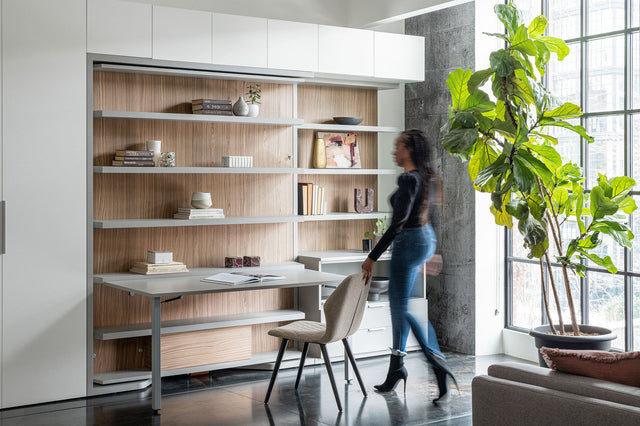
When closed, the multifunctional piece now provides a sofa to relax on, a desk to work at, a dining surface for guests, or shelving that surrounds a mounted television. When opened, it reveals a full-size sleeping environment with a quality mattress, integrated lighting, and charging ports. New technology has now introduced motorized options to lower and lift the bed with the push of a button.
Integrated cabinetry above the bed draws storage off countertops and out of sight, keeping surfaces clear and the room visually calm. The best studio apartments allow rooms to change function throughout the day.
2. Multifunctional and Modular Seating
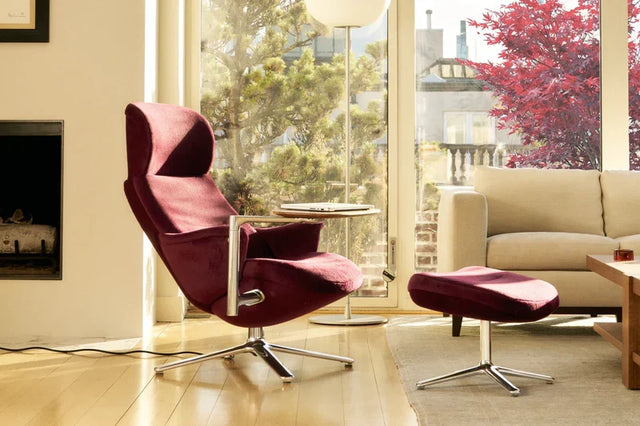
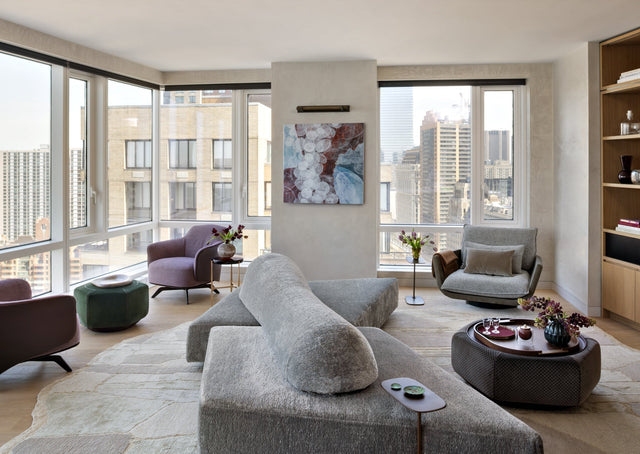
Seating is often the second-largest footprint in a studio, and it is where compromise tends to show most clearly. Modular furniture designed for urban living resolves this by building flexibility directly into the design: armrests that swivel outward for additional seating, backrest cushions that reposition to convert a sectional into a chaise or a tete-a-tete, or components that reconfigure as the space demands. Apartment-scale proportions and refined materials ensure the seating reads as a design choice, not a compromise.
3. Expandable and Transforming Dining Tables
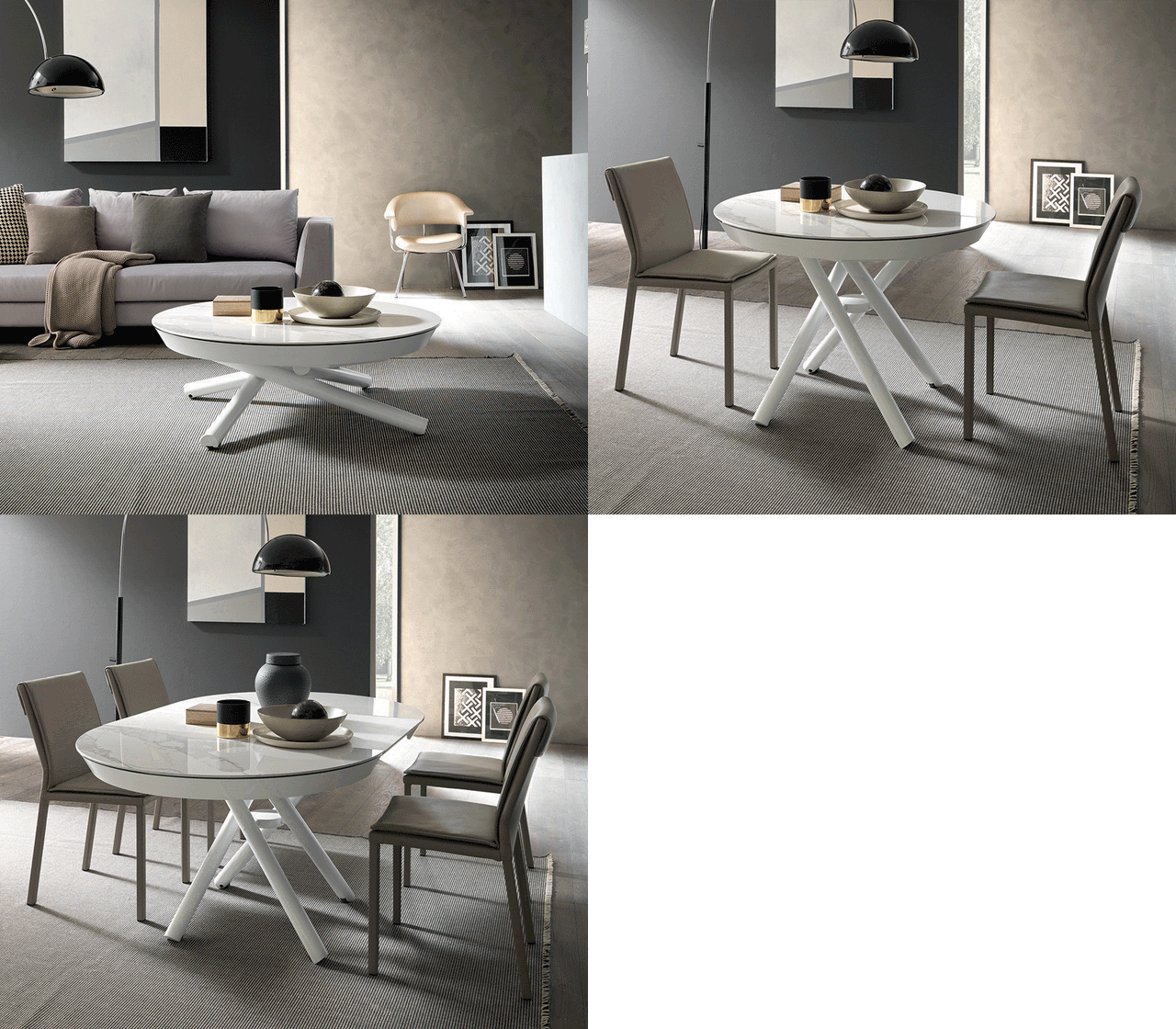
The most intelligent dining solutions work in two directions: expanding horizontally to accommodate more surface area, and adjusting vertically from coffee table to full dining height as the moment requires. Some pivot out from the wall, others tuck beneath a wall bed when not in use. Considered finishes, from wood veneer and lacquer to ceramic and mortar-look surfaces, mean the table can be tailored to suit almost any design aesthetic.
The best furniture adapts to occasional needs without permanently consuming space.
4. Modular Storage Systems
A high-functioning studio has very little visible clutter, not because there is less to store, but because the storage works for your needs. Floor-to-ceiling cabinetry and modular wall systems consolidate storage into a single, cohesive system. Wardrobes, upper cabinets, shelving, and display areas configured into a unified wall read as intentional millwork. A fold-away desk disappears at the end of the workday, a bar cabinet opens for an evening with guests and closes when they leave. Shoes, coats, and seasonal items have a home when they aren’t in use. The apartment isn’t holding less, but none of it is visible unless it needs to be.
5. Zoned Furniture Layouts

Furniture can also be used as a tool to create function and designated areas in a studio apartment. A modular shelving unit between a living and sleeping area creates a natural boundary while contributing storage on both sides. A sofa oriented toward the living zone establishes a clear edge, while a console behind it signals where one area ends and the next begins. The room stays open, but each part of it has a distinct sense of purpose.
Why Quality Matters More in Small Apartments
In a studio apartment, there is nowhere for a poor decision to hide. For transforming furniture specifically, build quality is non-negotiable: a wall bed opened and closed daily, a dining table that shifts between heights, a sofa that reconfigures—each relies on hardware and construction that performs reliably over years of active use. Furniture and storage systems designed to work together–coordinated in finish, proportion, and detail–create a visual calm that isolated pieces cannot. It is that unity of material, craft, and intention that turns a compact apartment into a home.
Designing Around Dead Space

Every apartment has areas that are challenging to solve: the awkward corner that no standard piece fits into, the narrow hallway too small for a full cabinet. Modular storage systems address this because components are designed to be combined and scaled to fit the unique geometry of a room.
A wall bed contributes differently. When stowed, it returns its full floor footprint to the room, and what activates that space–a sofa, a dining surface, a desk, a media wall--is determined by how the apartment needs to function at that moment.
Designing for Day-to-Night Living
The studios that work best are designed around a daily routine. Breakfast at a dining table that lowers to a coffee surface by midday. A desk that folds away when the workday ends. A sofa that reconfigures when guests arrive. A wall that becomes a bedroom at night and a living room again by morning. A real NYC studio apartment transformation shows what becomes possible when furniture is designed to optimize a space.
Why Adaptability Matters More in NYC
Owning or renting a NYC studio apartment is expensive, and the premium on adaptability is higher than almost anywhere else. The cost per square foot in Manhattan and Brooklyn means you’re working with less, so it is important to make it all work for you. A studio in New York often has to simultaneously function as a home office, a guest space, an entertaining environment, and a primary residence. Furniture that can support that full range within a single floor plan is essential.
Why Experiencing Small-Space Furniture in Person Matters
A showroom visit makes the difference clear. You can try the sofas, feel the fabrics and finishes, test the mattresses, and experience the mechanisms firsthand. Most importantly, you can work one-on-one with an experienced Sales & Design Consultant to refine your floor plan and choose the solutions that fit the way you live.
Visiting the Resource Furniture NYC Showroom

When visiting the Resource Furniture NYC showroom, we recommend scheduling time with one of our designers. Working directly with a space planner gives you access to someone who understands the demands of compact urban living, can read a floor plan with fresh eyes, and knows which systems will perform best for the way you actually live. Room measurements and photographs are a useful starting point.
Scale: Ask how specific pieces perform in room sizes similar to yours.
Movement: Operate transforming furniture yourself. Opening a wall bed or raising a dining table communicates quality in a new way.
Finishes: Material quality and finish coordination read differently in person than on screen.
Configuration: Seeing the full range of sizes and finishes available opens possibilities that catalog browsing cannot convey.
Choosing Furniture for Manhattan Apartments
There are a few more logistical considerations to think about when choosing furniture for a pied-a-terre or studio apartment in Manhattan. Our dedicated Project Managers can help assess elevator access, narrow doorways, and pre-war proportions that all influence what can be delivered and how systems need to be configured. Visiting our Manhattan furniture showroom with your floor plan gives our designers the context to recommend the right solution from the start.
Space-Saving Furniture for Brooklyn Apartments
Brooklyn lofts and live-work spaces offer high ceilings and open floor plans with tremendous potential, but little inherent structure. Our designers understand how to use vertical height, define functional zones with room dividers, and create furniture layouts that support both daily use and larger gatherings. The Manhattan showroom is worth the trip for Brooklyn residents working through these challenges.
How to Design a Studio Apartment That Feels Larger

Beyond furniture selection, a few design principles consistently make compact spaces feel more open. Light, neutral palettes reflect natural light and reduce the visual weight of walls. Layered lighting, combining overhead sources with task and accent lighting, gives a room depth and allows zones to activate or recede throughout the day. Integrated storage keeps surfaces clear: when everything has a place and clutter is behind closed doors, the room reads as larger than it actually is. Cohesive finishes across furniture systems reinforce this further.
The Smarter Way to Think About Small Apartments
Most people furnishing a studio start by editing: a smaller sofa, a narrower dining table, or a low-profile bed frame. The proportions improve, but the function rarely does. The apartment fits together without ever quite working together.
The studios that work best are furnished with fewer multifunctional pieces, each selected to provide more than one furniture solution. Intentional layouts, where furniture placement serves circulation, zone definition, and natural light, create apartments that feel deliberate. A case study of a multifunctional Brooklyn apartment shows what becomes possible when a space is designed with the goal to optimize space.
Final Thoughts: The Future of Small-Space Living
Denser cities, smaller footprints, and higher expectations for livability make adaptable furniture design a practical necessity. The best studio apartments are not defined by size; they are defined by how intelligently the space adapts to daily life.
For those ready to move from concept to application: experience adaptable furniture systems in NYC at our showroom, or schedule a design consultation to work through your specific apartment with a specialist.
Frequently Asked Questions
What furniture works best in a studio apartment?
Wall bed systems with integrated storage, height-adjusting dining tables, modular seating, and floor-to-ceiling storage systems. The goal is to maximize function while minimizing permanent footprint.
How do you maximize space in a studio apartment?
Combine transforming furniture, vertical storage, and intentional layout. Reducing visual clutter and maintaining a cohesive material palette make a meaningful difference in how the apartment feels.
Are Murphy beds good for studio apartments?
Wall beds are among the most impactful investments in studio design. A quality system returns 40 to 50 square feet to the floor plan during waking hours, integrates seamlessly with surrounding cabinetry, and offers the room a second function during the day. Motorized options lower and lift with the push of a button.
How do you separate spaces in a studio apartment?
A modular shelving unit between zones creates a natural boundary while adding storage. Furniture placement reinforces it: a sofa facing the living zone establishes a clear edge, and a console behind it signals the transition. Lighting activates one zone while allowing another to recede.
What size sofa is best for a studio apartment?
Apartment-scale sofas in the 72 to 84 inch range tend to perform best. Modular options offer additional flexibility. The key is proportion: oversized seating makes a studio feel contracted, while scaled pieces preserve circulation and visual openness.
Where can I buy space-saving furniture in NYC?
Resource Furniture's NYC showroom features transforming wall beds, modular seating, expandable dining, and integrated storage systems, with designers available to discuss how each performs in your specific layout.
Recent Posts

The West Coast Design Calendar: Los Angeles, San Francisco, and Seattle This Fall

A Battery Park City Home Built for Change

The Room Between Visits: Rethinking an Underused Bedroom in Los Angeles

Transforming Tables Compared: Which Type Is Right for Your Space?

Two Projects, One Idea: Young Huh Designs for Flexibility