Studio Apartment Layout Mistakes (And How to Fix Them)

A studio apartment layout can be one of the hardest floor plans to get right. The same room has to handle sleep, work, meals, storage, and the hour at the end of the day when you want none of those things in view.
The best studio apartment layout ideas are less about decorating and more about planning your floor plan so one room can shift between a bedroom, living room, and workspace. Whether you are moving into a first city rental, furnishing an ADU or vacation property, downsizing after the kids move out, or trying to give a client more function without adding square footage, the challenge is the same: make one room do several jobs without looking like it is trying to do them all at once.
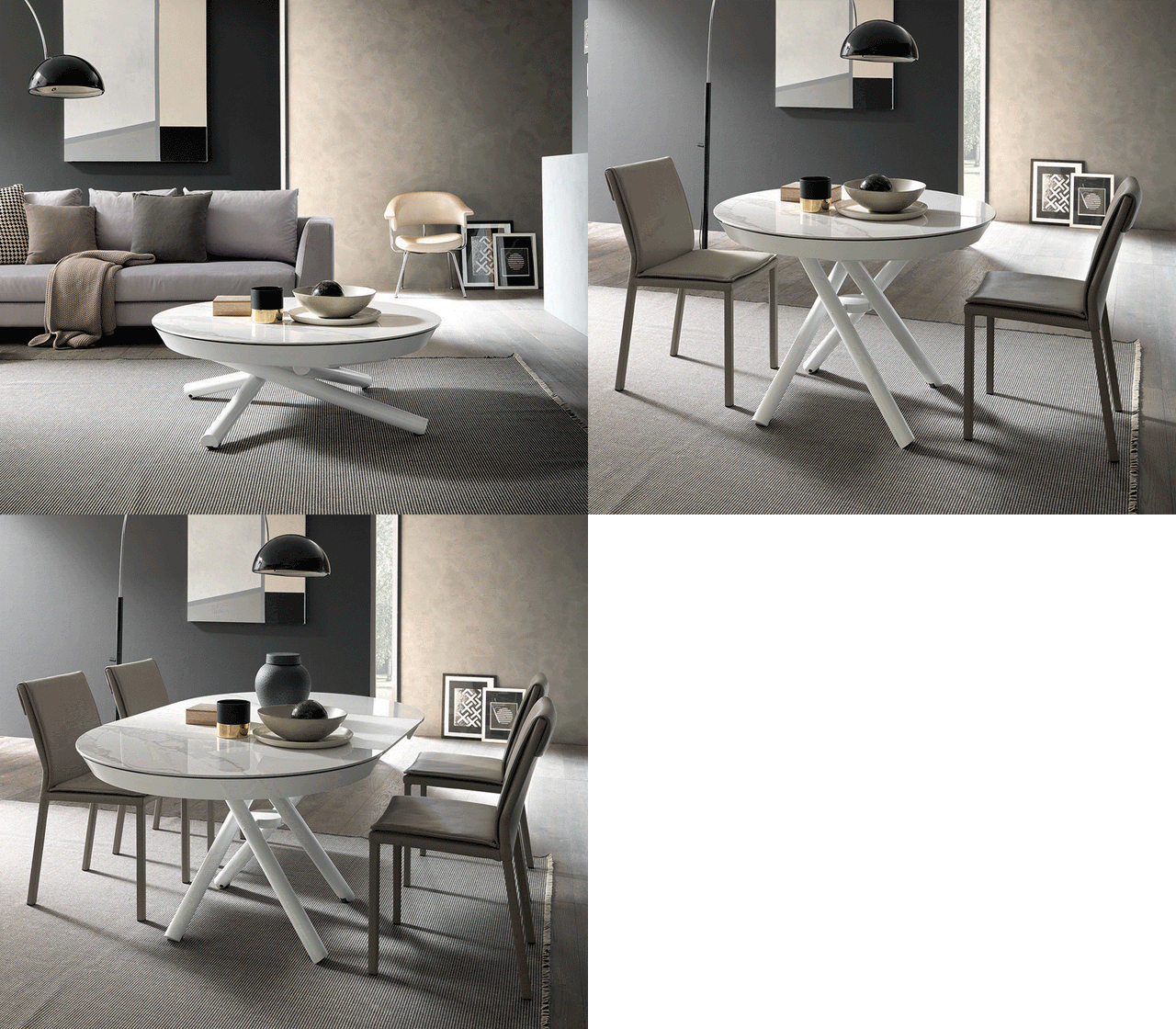
This is where multifunctional furniture earns its place. A Murphy bed clears floor space by morning. A fold-down desk creates a real work zone. An expandable table lets a small studio apartment layout shift when dinner, deadlines, or overnight guests show up.
In this article:
Key insights
-
Start with movement, not shopping. The room has to be easy to cross before it can be easy to style.
-
Give work, sleep, and living their own zones, even if those zones share one open room.
-
Fix the biggest footprint first. In most studios, that means rethinking the bed.
-
Use height and daylight as part of the layout, not as afterthoughts.
-
Choose furniture that can change function instead of adding more pieces to do more jobs.
Your studio apartment layout is the foundation
Before you choose a sofa, shelving, or the side chair you swear will not become a laundry chair, look at the room itself. Where is the longest uninterrupted wall? Which path do you take from the front door to the kitchen, from the kitchen to the bath, from the closet to the window? Those routes should stay open.
A lot of layout problems start when people furnish a studio the way they would furnish a one-bedroom. They place a bed first, then try to wedge everything else around it. The result is familiar: a narrow path to the window, a chair no one sits in, and a dining table that is either too small to use or too big to ignore.
Start instead with what the room needs to do each day. Do you work from home? Have people over for dinner? Need hidden storage for bedding, files, or workout gear? Once those needs are clear, the layout starts to answer back.
In many studios, even the small bathroom and kitchen compete for space, which makes every layout decision carry more weight.
Defining stories about how you live
In a studio, each zone has its own job and its own mood. The sleeping area should not feel like the dining spot, and the workspace should not read like the place where you unwind. That is the point of zoning a studio apartment.
Rugs help anchor one zone without building a wall. Lighting shifts the room from task space to living space. Careful studio apartment furniture placement can divide the room more gently than a screen ever will. A console behind a sofa, a chair turned toward the window, or a low bookcase at the edge of a work area can all do the trick.
In some layouts, a light room divider or open shelving can help create separation, but often the stronger move is to establish a clear focal point so each zone feels intentional without closing the space off.
This is also where Resource Furniture pieces stand apart. A closed wall bed can read like cabinetry in the background of a living room. Open it at night, and the room changes completely. That shift is what makes wall beds for studio apartments do more than save space.
6 common studio apartment layout mistakes
Most studio apartment mistakes come down to poor zoning, weak furniture placement, or one oversized piece in the wrong spot. The good news is that the fixes are usually clearer than they look.
-
Losing square footage: When a fixed bed owns the biggest footprint in the room, everything else becomes a workaround. The smartest fix is to let the bed leave the room when you are not using it. Well-designed Murphy bed systems turn sleeping space back into living space by day.
-
Ignoring flow: A layout can look balanced in photos and still be annoying to live with. If you have to sidestep a chair to reach the window or reroute around a table to get to the kitchen, your furniture placement is costing you usable space.
-
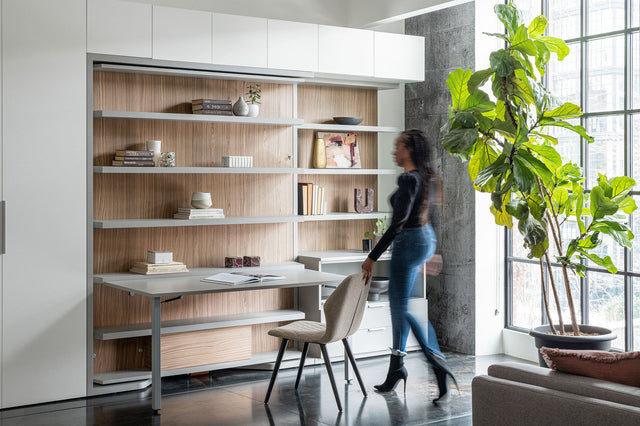
Working in the living area: When work lands on the dining table, the sofa arm, and the bed, the whole apartment starts to feel like one long shift. A wall-mounted or built-in desk, or a bank of fold-down desks gives the workday a clear start and a clean finish.
-
Forgetting to use vertical space: Low dressers and bins crowd the floor fast. Floor-to-ceiling cabinetry, floating shelves, and modular storage solutions use the upper half of the room, keep daily clutter out of sight, and make the space feel more architectural.
-
Buying static furniture: In a studio apartment layout, a dining table that only dines or a bed that only sleeps takes up more room than it returns. Multifunctional and transformative pieces make the same square footage work harder.
-
Blocking natural light: In a natural light small apartment, tall furniture in front of windows can flatten the whole room by noon. Keep window walls as open as you can, and let mirrors, lighter finishes, and lower profiles help carry daylight deeper inside.
Multifunctional furniture solutions for any studio apartment layout
The right furniture does more than fill a studio. It changes what the room can do. That is the real appeal of transformative furniture for small spaces: it creates room, surface area, and separation when you need them, then steps back when you do not.
Murphy beds

Murphy beds (or wall beds) solve the biggest studio problem first by reclaiming the room’s largest footprint. The old image of a clunky guest bed no longer applies. A modern wall bed can pair with shelving, lighting, sofas, or a desk, so the closed view feels like built-in furniture rather than something hidden in haste. For urban dwellers, remote workers, downsizers, and vacation-rental owners alike, that one move can change how the whole apartment functions.
Some layouts use a loft bed to free up space below, but for many people, a wall bed offers the same flexibility without committing to a raised sleeping area.
Transforming tables and desks
Studios also need surfaces that know when to stay small. A fold-down desk, fold-down table, or built-in table can keep work and dining from overtaking the room, while expandable dining tables give you a proper surface without leaving it open all week. Closed, they stay modest. Open, they handle dinner, deadlines, or guests. For remote workers, design-minded entertainers, and owners furnishing compact rentals, that flexibility is often what makes the room work day after day.
In tighter layouts, even a small kitchen island or a mobile bar cart can double as prep space, storage, or a visual anchor between zones.
Your studio apartment layout design
A good studio apartment layout does not ask one room to do everything at once. It lets the room change over the course of the day. The bed has a proper place. Work has a defined home. Storage stays out of sight. Dinner does not have to happen next to a laptop and a stack of mail.
That is what makes a studio feel deliberate instead of cramped. If you are ready to explore space-saving furniture that can make that happen, visit a Resource Furniture showroom or connect with a design consultant. Seeing the systems in person is often the moment a studio stops feeling like a compromise and starts looking like a plan.
Photography: Nathan Schroder
Recent Posts

The West Coast Design Calendar: Los Angeles, San Francisco, and Seattle This Fall

A Battery Park City Home Built for Change

The Room Between Visits: Rethinking an Underused Bedroom in Los Angeles

Transforming Tables Compared: Which Type Is Right for Your Space?

Two Projects, One Idea: Young Huh Designs for Flexibility