Sectional vs. Modular Furniture: What's the Difference?

Choosing a sofa is one of the most defining decisions in shaping a living space. It anchors the room, sets the tone for daily life, and must strike a balance between comfort and aesthetic grace. While the terms "sectional" and "modular" are often used interchangeably, there are some differences.
It’s important to note, however, that many of the sectionals at Resource Furniture are also modular. In fact, we provide a wide range of unique seating options offering the best of all worlds: comfort, design, and flexibility.
In general, understanding the nuances between sectional vs. modular furniture can be helpful when selecting a piece that not only fits your space but also adapts when your life evolves. The more you know, the better you can decide on the right fit for your furniture needs.
This blog will highlight the core differences, helping you make an informed choice that elevates your home's functionality and style.
In this article:
What is Sectional Seating?

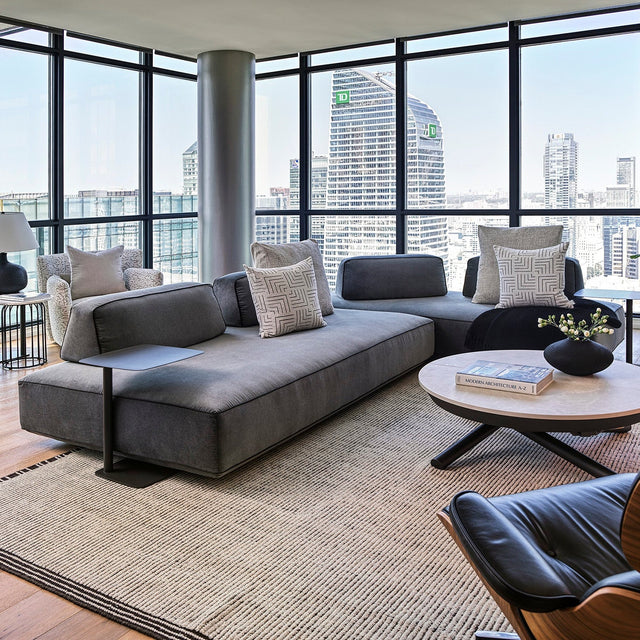
Imagine a beautifully crafted sofa, its form flowing seamlessly across a corner or along a wall. This is the essence of a sectional. Sectional sofas are composed of multiple pieces, or "sections," that are designed to be connected in a predetermined configuration. Common shapes include L-shaped or U-shaped arrangements, creating a large, unified seating area.
While you select the configuration at the time of purchase, a sectional is largely a permanent fixture. This is its key differentiator from modular furniture. While sectional sofas are “modular,” they are intended to be in one (or perhaps two) configurations. In other words, pieces are intended to remain connected, creating a fixed footprint ideal for a dedicated living room or a grand family space where the layout is settled.
The beauty of a sectional lies in its ability to define a zone for relaxation and social gatherings, offering generous, uninterrupted comfort. It’s a statement piece, designed for permanence and stability in larger homes where its grand scale can be fully appreciated.
What is Modular Furniture?

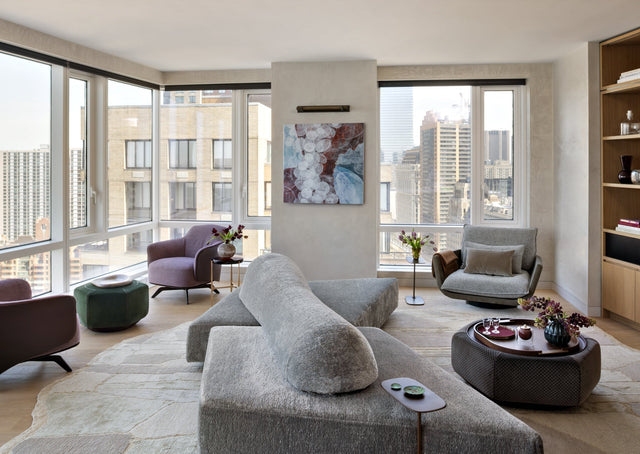
Modular furniture, beyond traditional fixed sectionals, is the essence of adaptability. The customizable furniture consists of individual, independent modules or "blocks" that can be arranged, rearranged, added to, or removed to create a truly bespoke seating solution. Think of it as a set of building blocks for your living space. Each piece is fully finished on all sides, allowing it to stand alone as a chair, an ottoman, with the option of being combined with other modules to form a sofa, a chaise lounge, or an expansive seating landscape.
This inherent flexibility is the heart of modular design. It’s created for a life in motion, where needs can change overnight. A modular system can expand to accommodate a growing family, shrink for a downsized home, or transform to serve multiple functions within a single room.
For a deeper dive, explore our complete guide on modular furniture.
Sectional vs Modular Furniture: The Key Differences
While sectionals fall under the broader category of modular furniture, their functionality differs. Here are the fundamental distinctions between traditional sectionals and fully modular systems:
Reconfigurability
This is the most significant difference. Standard sectional sofas are built for a fixed arrangement.
Modular furniture, however, is designed for change. Each module is a standalone piece, giving you the freedom to reconfigure your layout at will. You can separate a three-seater sofa into a chair and a loveseat, or add a new module to extend your seating. This reconfigurability is one of the main benefits of modular sofas, allowing your furniture to adapt to new homes, new family members, or simply a new mood.

At Resource Furniture, some of our sectional sofas are inherently modular. The Flex Sectional, for example, is designed to be broken up and still look beautiful. The Flex bases and backrests can be arranged in multiple configurations, keeping any space feel flexible and fresh.
Customization
With a typical sectional, customization happens primarily at the point of sale. You choose the configuration (left-facing or right-facing chaise, for example), the fabric, and the leg style. Once it arrives, the design is set.
Modular furniture offers a more dynamic and ongoing customization process. You can start with a few core pieces and add more over time. You could mix and match colors or fabrics for a truly unique look. This ability to evolve makes modular sofas a long-term investment that grows with you, rather than a piece you may outgrow.
Adaptability for Flexible Spaces
Modular furniture excels in any environment. Because you can select the exact number and size of modules, you can create a perfectly scaled sofa for a small apartment, home office, or accessory dwelling unit (ADU).
If you move to a larger home, you don't need a new sofa; you can simply purchase additional modules to expand your existing one. This adaptability makes it a superior choice for flexible furniture. Best for city life and anyone prioritizing efficient use of space.
Is Modular Seating Right for You?
Consider your lifestyle. Does it change? Modular furniture is a wise choice for those who anticipate life's evolutions.
-
Growing Families: Effortlessly add customizable furniture to make room for new family members.
-
Renters and Frequent Movers: Modular sofas can be broken down for easy transport and reconfigured to fit any new floor plan.
-
Downsizers: Simplify your seating by removing modules, rather than buying a whole new, smaller sofa.
-
Remote Workers: Create a dynamic living space that can transition from a professional work zone to a relaxing family area.
-
Multipurpose Rooms: Customizable furniture with integrated storage or a wall bed can transform a guest room into a home office or media room in minutes.
If you value long-term adaptability and flexible furniture that works as hard as you do, then our modular furniture is a sophisticated and design-forward option.
Frequently Asked Questions

Is modular furniture the same as a sectional?
A sectional sofa is a type of modular furniture (depending on its flexibility features). However, they are not necessarily the same. While both consist of multiple pieces, a typical sectional has a fixed, pre-determined configuration, while modular furniture is made of independent units that can be rearranged, added to, or used separately, offering far greater flexibility.
At Resource Furniture, we offer a range of sectional and modular sofas, designed for flexibility and comfort, no matter your lifestyle. Our sectionals are the ultimate flex pieces, available with a multitude of configurations.
Which is more flexible: a sectional or a modular sofa?
Modular sofas, like the Curve Sofa, are typically considered more flexible. Many of Resource Furniture’s sectional sofas are modular, ensuring movement and design aesthetics no matter your preferences. Their design is centered on reconfigurability, allowing you to change the layout, size, and even function of your seating arrangement as your needs evolve.
Can modular sofas be rearranged easily?
Yes, that is their primary advantage. Most modular sofas are designed with simple, secure connectors that allow you to separate and reconfigure the individual modules with minimal effort, transforming your space in minutes.
Step Into Modern Living with Resource Furniture
The choice between sectional vs modular hinges on your vision for your home. A sectional offers a grand, unifying presence for a settled space, while modular furniture provides unparalleled freedom and adaptability for a life in flux. It celebrates change, seeing it not as a challenge, but as an opportunity for reinvention.
At Resource Furniture, we believe in crafting pieces that are not only beautiful and luxurious but also intelligently designed for modern living. Our collection of modular furniture is engineered to empower you, giving you the tools to create a home that is truly responsive to your needs.
Recent Posts

How to Choose the Right Seating for Your Space: Sofas, Sectionals, Chairs & More

The Livability Quotient: A Better Way to Think About Multifamily Space

The West Coast Design Calendar: Los Angeles, San Francisco, and Seattle This Fall

A Battery Park City Home Built for Change

The Room Between Visits: Rethinking an Underused Bedroom in Los Angeles